
.jpg)
We're always one step ahead !

Safety and operating guide – Tripod ladder for orchard
Pick-up locations - Quebec & Ontario
By Appointment Only 514-755-7578
-
Warehouse: 260 Guizot Street West, Montreal, QC H2P 1L5
-
Frelighsburg, Estrie, QC J0J 1C0
-
4509 Bartlett Rd, Beamsville, ON L3J 0Z1
-
Since: Laval, QC

Tripod ladder for orchard - 3-legged stepladder
*User guide for a tripod orchard ladder (3 legs) for hedge trimming, orchards and horticultural work
⚠️ Recommendations & Mandatory Reading Before Use
1. Intended Use
Tripod ladders are specifically designed for:
-
Orchards
-
Fruit picking
-
Cedar hedge trimming
-
Horticultural work
-
Certain agricultural applications
They are intended primarily for use on:
-
Soil
-
Grass
-
Natural ground
-
Soft or uneven terrain
They are not designed for:
⚠️ They are neither designed nor recommended for:
-
long-duration work or intensive use;
-
use on hard surfaces without appropriate protection;
-
industrial work;
-
heavy-duty or severe work, including extensive pruning, tree felling, cutting large branches, or severe hedge reduction;
-
use as scaffolding;
-
use as a work platform.
Advice
-
Only one person should use the ladder at a time.
-
The user must always comply with the ladder’s maximum load capacity, as well as the instructions, warnings, and limitations of use established by the ladder manufacturer.
-
The user must also comply with the instructions, warnings, and limitations of use for any tool or equipment used on the ladder, near the ladder, or within the work area, and must ensure that its use is compatible with safe work on the ladder.
2. Inspect Before Every Use
Before climbing the ladder, perform a complete inspection.
Check for:
-
Cracks
-
Bent or deformed components
-
Damaged welds
-
Damaged steps
-
Damaged side rails
-
Damaged feet
-
Locking mechanisms
-
Locking pins
-
Proper adjustment of the third leg
-
Any defect may compromise your safety.
-
A damaged ladder must be removed from service immediately.
3. Ladder Setup
Proper setup is essential for safe use.
Before beginning:
-
Choose stable ground.
-
Whenever possible, use soft or natural terrain.
-
Fully open the ladder.
-
Ensure all locking mechanisms are securely engaged.
-
Position the third leg correctly.
-
Adjust the rear leg to match the ground slope.
-
Maintain an opening angle of approximately 70°–75°.
-
All three feet must be firmly supported before climbing.
4. Environments Where Use Is Not Recommended
Never use the ladder:
-
On ice
-
In snow
-
In deep mud
-
On unstable ground
-
During strong winds
-
During thunderstorms
-
In poor visibility
-
Near overhead electrical power lines
-
Leaning against a tree or wall
-
When any foot is not fully supported
-
Stability must always be your highest priority.
5. Safe Work Practices
For safer operation:
-
Always face the ladder.
-
Maintain three points of contact.
-
Climb slowly.
-
Descend slowly.
-
Keep your body centered between the side rails.
-
Stand in the middle of the steps.
-
Maintain your balance at all times.
Never use the ladder while under the influence of:
-
Alcohol
-
Drugs
-
Medications that may impair alertness
-
Excessive fatigue
6. Never Do the Following
Do not:
-
Move the ladder while someone is on it.
-
Adjust the ladder while it is being used.
-
Carry bulky or heavy loads while climbing.
-
Stand above the highest recommended step.
-
Overreach beyond the ladder's centerline.
-
Use the ladder as a work platform.
-
Use the ladder as a sawhorse.
-
Modify the ladder's structure.
-
Attempt to repair the ladder yourself.
7. Maintenance
Regular maintenance helps extend the service life of your ladder.
After each use:
-
Remove mud and dirt.
-
Clean off oil or grease.
-
Remove ice.
-
Remove chemical residues.
-
Keep the steps clean and slip-resistant.
-
Inspect all moving parts.
8. Transportation
When transporting the ladder:
-
Never drag it on the ground.
-
Carry it by the main frame.
-
Do not lift it using only the third leg.
-
Secure all moving parts.
-
Use an appropriate load-securing system.
-
Improper transportation may damage the ladder and create a road hazard.
9. Storage
Store your ladder:
-
In a dry location
-
In a clean environment
-
In a well-ventilated area
-
Away from corrosive substances
-
Without placing heavy objects on top of it
-
Proper storage helps preserve the ladder's stability and service life.
10. Remove From Service
Immediately remove the ladder from service if it shows:
-
Cracks
-
Damaged welds
-
Bent or deformed components
-
Loose or unstable steps
-
Defective locking mechanisms
-
Never modify or repair a damaged ladder.
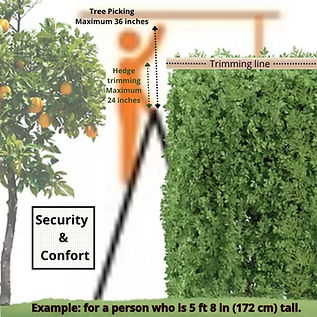
11. Choosing the Right Ladder Height
A ladder that is too short or too tall increases the risk of falls.
Always choose a ladder appropriate for:
-
The working height
-
The terrain
-
The type of vegetation
-
Your working method
Using the correct ladder height provides:
-
Greater comfort
-
Improved efficiency
-
Increased safety
-
Choosing the proper ladder height helps maintain a natural working position, reduces excessive reaching, and allows work to be performed more safely and efficiently.
-
Depending on the range of working heights required, owning more than one ladder height may be necessary to ensure safer, more stable, and more efficient work.
12. Fall Prevention
Before each job, follow appropriate fall prevention practices.
Always follow the recommendations provided by:
-
The ladder manufacturer (ladder safety labels)
-
The manufacturers of your tools
-
Occupational health and safety authorities
Depending on your location and industry, useful safety references include:
-
CNESST
-
CCOHS (Canadian Centre for Occupational Health and Safety)
-
CSA Group
-
RSST
-
Légis Québec
-
WSPS (Workplace Safety & Prevention Services)
-
⚠️ If the work exceeds the user's physical capabilities, experience level, the limitations of the selected equipment, or the knowledge required to perform the work safely, we recommend hiring a qualified and experienced contractor with the appropriate equipment and expertise to help reduce the risk of accidents, falls, serious injury, or death.
Conclusion
Choosing a high-quality tripod orchard ladder is an essential first step, but selecting the correct ladder height is equally important for working safely, securely, and efficiently.
Before making a purchasing decision, it is strongly recommended that you carefully read this guide, along with all instructions, warnings, labels, and recommendations provided by the manufacturer. A thorough understanding of your equipment and its intended use will help you select the most suitable ladder for your needs and use it more safely.
It is also important to ensure that the user has the physical ability, skills, knowledge, and experience required to safely perform work at height. If you have any doubts about your physical condition, balance, experience, or ability to use a ladder safely, consult a qualified professional or hire someone who is properly trained to perform the work.
A properly selected ladder helps maintain a natural working posture, reduces unnecessary reaching, improves work accuracy, and minimizes the risk of falls or loss of balance.
✅ Depending on the working height, it may be necessary to own more than one ladder size so you can always use the most appropriate ladder for each task. Working at the correct height provides better stability, greater comfort, improved efficiency, and helps reduce fatigue during hedge trimming, apple harvesting, orchard maintenance, and other horticultural work.
Your ladder selection should never be based solely on its price or overall height. Consider the following factors before making your choice:
-
The actual working height required
-
The type of trees, hedges, or vegetation being maintained
-
Ground conditions
-
Frequency of use
-
The ladder's maximum load capacity
-
The user's height, physical abilities, and level of experience
A properly selected ladder, used in accordance with the manufacturer's instructions, is a long-term investment in your safety, productivity, and the quality of your work.
⚠️ Important: The recommended ladder sizes provided in this guide are intended for general guidance only. The most suitable ladder may vary depending on the user's height, experience, physical condition, the type of work being performed, ground conditions, the tools being used, and personal preferences.
Regardless of the ladder you choose, always inspect it before every use, follow all safety instructions, and comply with the manufacturer's recommendations. Responsible use, combined with a high-quality ladder that is properly suited to the task, remains the best way to work efficiently while minimizing the risks associated with working at height.
*How to choose a horticultural tripod ladder (3 legs) for your hedges, orchards and horticultural work?
To make an informed choice and select the model best suited to your needs, we strongly encourage you to read this guide before purchasing. You will find essential information to help you choose the correct ladder height and avoid making the wrong selection.
👉 Click on the link below:
"How to choose a horticultural tripod ladder (3 legs) for your hedges and orchards?"
EN 131 Standard
A Mark of Quality for Orchard Ladders, Hedge Trimming, and Horticultural Ladders
Why Choose a Ladder That Meets the EN 131 Standard?
When working at height, the quality of your equipment is essential.
The EN 131 Standard is an internationally recognized benchmark for the design, manufacturing, testing, and performance of portable ladders. It establishes rigorous technical requirements to help ensure a higher level of safety, reliability, and durability.
The EN 131 Standard focuses on key performance criteria, including:
-
Stability
-
Strength
-
Durability
-
Safety
Rigorous Testing
Ladders that comply with the EN 131 Standard undergo a series of demanding tests, including:
-
Load capacity
-
Torsional strength
-
Stability
-
Slip resistance
-
Durability and endurance
These tests help verify that the ladder performs safely under normal operating conditions when used in accordance with the manufacturer's instructions.
The Benefits of an EN 131 Certified Ladder
Choosing a ladder that complies with the EN 131 Standard offers several important advantages:
-
Improved stability
-
Greater structural strength
-
Proven engineering and design
-
Increased confidence when working at height
Whether you are a professional contractor, orchard grower, landscaper, horticulturist, or homeowner, an EN 131 certified ladder is an excellent indicator of product quality, safety, and long-term reliability.
*Instruction & General Safety Guide
⚠️ General Safety
-
Check certification and maximum load capacity
-
One user at a time only
-
For outdoor use only
⚡ Danger – Electricity
-
Ladder conducts electricity
-
Keep a safe distance from power lines
-
Follow all applicable safety regulations
⚠️ Usage
-
Use on soft ground only
-
Designed for short-duration tasks
-
Safety chain required
-
Recommended angle: 70°–75°
🔍 Pre-Use Inspection
-
Inspect structure and welds
-
Ensure all adjustments are securely locked
-
Do not use if damaged
-
⚠️ Never repair a ladder
🛠️ Setup
-
Place on a stable, clear surface
-
Ensure feet are firmly anchored in the ground
-
Always use on soft terrain
-
Ensure that the locking systems are properly in place
✅ Safe Use Practices
-
Always face the ladder
-
Maintain 3 points of contact
-
Do not overreach
-
Do not stand on the top step
-
Keep your body centered
-
Do not use under the influence (alcohol, medication, fatigue)
⚠️ Important Warnings
-
Do not use on hard surfaces (concrete, asphalt)
-
Always use the third leg for stability
🧼 Maintenance
-
Keep ladder clean and dry
-
Secure properly during transport
-
Destroy if damaged
📋 Standards & Recommendations
Always consult:
-
The manufacturer's instructions for the tools being used
-
Safety labels
Follow best practices for:
-
Fall prevention
-
Safe arborist work
-
Proper use of portable ladders (3 or 4 legs)
-
References to Consult :
CNESST – CSA – CCHST – RSST – CSTC – WSPS Canada – Légis Québec
A well-structured safety guide improves user understanding, reduces risk, and reinforces product credibility in professional environments.
⚠️ The information contained in this guide is provided for general informational purposes only, without warranty, and is subject to change without notice. Each user is solely responsible for determining whether the ladder is suitable for their intended use, complying with the manufacturer's instructions, and using the product safely.